
Nose Bleed in Children/Toddlers
A nose bleed (also called epistaxis) occurs when a small blood vessel in the lining of the nose bursts. The inside of the nose is delicate and the blood vessels are close to the surface. This makes them fragile and easy to burst and start bleeding. Nosebleeds are very common in children and often result from harmless activities such as your child picking their nose, blowing it too hard or too often or from getting knocked on the nose during play. The bleeding is usually minimal (even though it may look like a lot of blood when soaked in a tissue or on clothing) and brief (less than ten minutes duration).
First Aid treatment for Nose Bleed
Your child may be very distressed and upset by the sight and taste of blood during a nose bleed. Try to reassure your child and tell them that that they will be fine or that ‘everything is okay’. They may be frightened that there is something seriously wrong.
Crying will make the bleeding worse, so firstly it is important for you to calm and soothe your child.
Follow these instructions after nose bleed:
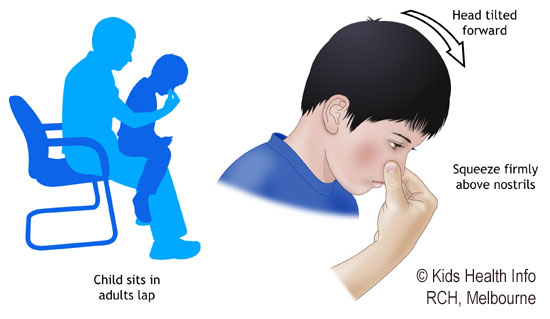
- Sit your child upright in a comfortable position, and lean slightly forward.
- Squeeze the lower, soft part of the front of the nose pressing the nostrils together with your fingers, a tissue or a cloth (your child can do this if they are older) for 10 minutes
- Applying an icepack or cool, wet cloth to the bridge of your child’s nose may also be helpful.
- Offer your child an icypole or cold drink, this will cool them down and get rid of the ‘yucky’ taste of blood.
- Encourage your child to spit out any blood that has dripped from their nose into their mouth. Swallowed blood may make your child vomit and cause the nose bleed to continue or worsen.